Concept, importance, Content theories (Maslow’s need theory, Alderfers’ ERG theory, McCllelands’ theory of needs, Herzberg’s two factor theory) & Process theories (Adams equity theory, Vrooms expectancy theory).
Table of Contents
- Motivation
- Motivational Theories
- Douglas McGregor’s Theory X & Theory Y
- Need Hierarchy Theory
- Alan Chapman
- ERG theory
- Herzberg Hygiene Theory
- Achievement Motivation Theory
- Instinctive Theory of Motivation
- Self Efficacy theory
- Self Determination Theory
- Cognitive evaluation theory
- Goal setting theory
- Expectancy Model
- Performances Satisfaction Model
- Equity Theory
- Conditioning
- Carrot and Stick Approach
- Cognitive dissonance Theory
- SMART Goals
- Morale
Motivation
Motivation is the extent of willingness of an employee to respond to the organisational requirements.
Dubin has defined motivation as “the complex of forces starting and keeping a person at work in an organisation. Motivation is something that moves the person to action, and continues him in the course of action already initiated”.
Dalton E.McFarland, “Motivation refers to the way in which urges, drives, aspirations, striving or needs direct, control or explain the behaviour of human beings”.
Primary needs – related to physiology of life.
Secondary needs are related to mind and spirit.
Motivation is a sub function of directing.
Type A and Type B personality hypothesis
- Personalities that are more competitive, highly organized, ambitious, impatient, highly aware of time management and/or aggressive are labeled Type A,
- More relaxed, less “neurotic”, ‘frantic’, ‘explainable’, personalities are labeled Type B.
Motivational Theories
Two types of motivational theories –
- Content theories: What motivates and what does not motivate people or Need based theories or Humanistic approach to motivation
- Also called need based theories
- Process theories (cognitive theories): the variables that go into the motivational process taking place within an individual. (How someone is motivated)
Content Theories
- Maslow
- Alderfer
- McClelland
- Herzberg
- McGregor
- Instinctive
Process Theories
- Skinner’s Reinforcement Theory
- Vroom’s Expectancy
- Adam’s Equity
- Locke’s Goal Setting

Traditional theories
- Maslow’s Theory of Motivation
- Theory X and Theory Y by Douglas McGregor
- Herzberg’s Two-Factor Theory of Motivation
Contemporary Theories
These are not necessarily developed recently but they represent the current state of mind of managers. Ex-
- Self efficacy theory by Albert bandura
- Clayton Alderfer’s ERG theory
- David McClelland achievement motivation theory
- Cognitive evaluation theory by E L Deci
- Goal setting theory by Erwin Locke
- Victor H Vroom expectancy model
- James Stacy Adams equity theory
- Job design theory
- Performance satisfaction model by Porter & Lawler
- BF Skinner reinforcement theory
Douglas McGregor’s Theory X & Theory Y

- Type X employee – Pessimist Worker
- Type Y employee – Optimistic Worker
- Douglas McGregor personally agreed with Theory Y i.e, he believed that most of the workers are positive.
- Theory Z by William Ouchi : 3 such theories ; one of them by Maslow
- Employee participate in decision making
Need Hierarchy Theory
By Abraham Maslow

5 types of needs :

Self Actualisation- Taking job of one’s own liking, job itself becomes pleasing; becoming everything one is capable of becoming.
Maslow believed that best managers are those who improve the health of the employees.
Motivations are only one class of determinants of behaviour.
- Only one need is active at a point of time
Satisfaction Progression: Individual moves to higher level need only after satisfaction of lower level need.
Alan Chapman
Maslow’s theory was further improved by Alan Chapman
8 Needs:
- Physiological,
- safety,
- social,
- esteem,
- Cognitive :knowledge and intellect
- Aesthetic: balance and beauty; project leadership
- self actualisation
- Transcendence: help others achieve self-actualisation
Spiral structure of need by Michael Graves ??
ERG theory
- by Clayton Paul Alderfer
- condenses Maslow’s five human needs into three categories
- Existence, Relatedness and Growth
- Existence = Maslow’s lower order needs (Physiological and Safety)
- Relatedness = Maslow’s interpersonal love and esteem needs
- Growth = self-actualization and self-esteem needs.
- Multiple needs can be active at one point in time
- no specific hierarchy of needs
- Growth need is subjective to individual
- Frustration Regression : When a higher- level need is frustrated the individual’s desire to increase a lower- level need takes place. Ex: Inability to satisfy a need for social interaction might increase the desire for more money or better working conditions. So frustration can lead to a regression to a lower need.
Want never dies in totality whether satisfied or not
– Alderfer
Herzberg Hygiene Theory

By Frederick Herzberg
It is also called Two Factor Theory / Hygiene Motivator Theory / Dual unipolar trait theory.
Hygiene Factors
Hygiene factors also known as dissatisfiers, maintenance factors, context factors, extrinsic factors:
- Company Policies
- supervision;
- salary
- Physical Working Conditions
- Interpersonal relations
- Job Security
- Personal life,
- Presence of the Hygiene factors does not lead to satisfaction (motivation). However, their absence leads to demotivation.
- Presence of Hygiene = no dissatisfaction
Motivational factors
- They motivate employees.
- These are often additional benefits in a job.
Motivators are referred to as satisfiers, contained factors, growth factors, intrinsic factors.
- Attraction of the work itself
- Recognition
- Sense of achievement
- Advancement – Growth and promotional opportunities
- Responsibility
- Meaningfulness of the work
- Absence of Motivators causes no dissatisfaction, but their presence has motivational impact.
An individual may be satisfied as well as not motivated at the same time and Dissatisfied and motivated.
Opposite of satisfaction (motivation) is not dissatisfaction (lack of hygiene). Removing dissatisfying characteristics from a job does not necessarily make the job satisfying (motivating), it just makes it not dissatisfying.Hygiene factors should be attended to when dissatisfaction is to be reduced. If, however, satisfaction is to be increased, attention needs to be given to motivators.
Status (Need of esteem) is satisfier as well as dissatisfier. It motivates and can also dissatisfy.
Achievement Motivation Theory
by David C McClelland
Affiliation — Achievement — Power (AAP)
Memory Aid: AAP (Aam Aadmi Party) 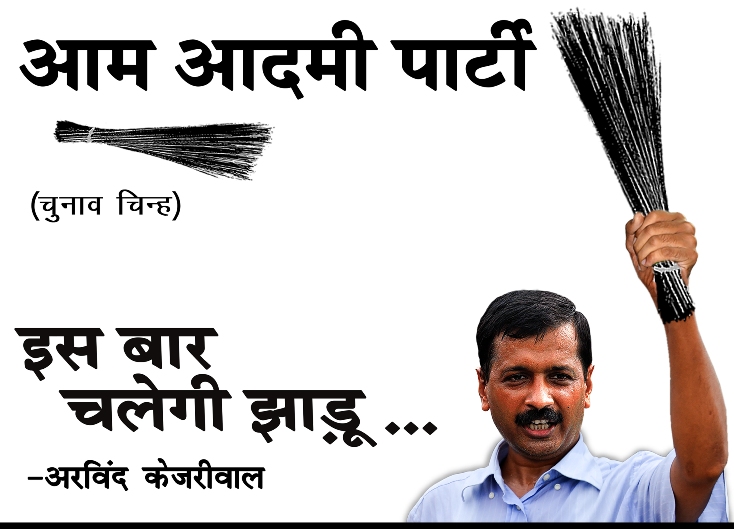
High achievers are not motivated by money per se, money is their indicator of achievement.
3 Types of needs:
- Achievement: People driven by the challenge of success and the fear of failure
- Power: Demanding, Ambitious performers
- Affiliation: Socializing, Driven by love and Faith
McClelland‘s successful managers:
- high on need for power but low on need for affiliation
- Moderate need for achievement
- Low need for affiliation
- Agreeableness
- with the advancement in hierarchy the need for power and achievement increased rather than Affiliation
- People who were at the top, later ceased to be motivated by these drives
| Sirota’s Three-Factor Theory, also proposes three motivating factors that are close but not exactly the same as to McClelland: equity/fairness, achievement, and camaraderie. A difference noted between Sirota’s and McClelland’s theory is that according to Sirota everyone starts a new job with enthusiasm and motivation to do good. But with time, poor company policies or any other conditions, causing employees to lose their motivation and effectiveness on work. While McClelland’s theory, states that one leading motivator helps individuals perform, which is generally based on one’s culture and life experiences. |
Instinctive Theory of Motivation
Biological or genetic programming as the cause of motivation. This claim means that all humans have the same motivations due to our similar biological programming. This theory says that the root of all motivations is the motivation to survive. From our motivation to survive, all other motivations emerge. And, as we act or behave with this kind of motivation, all our actions are therefore considered as instincts.
Learning or Conditioning does not affect the motivation to behave in a certain way.
Its intrinsic motivation as person is motivated by internal needs such as hunger, thirst etc.

Self Efficacy theory
by Albert Bandura
4 ways of self efficacy
- Inactive mastery
- vicarious modelling
- verbal persuasion
- arousal
Pygmalion / Galatea effect: success lies in our thoughts
Self Determination Theory
By Deci & Ryan
3 Needs: Competence | Autonomy | Relatedness (CAR)
Memory Aid: Self Driven CARThese three needs are innate and universal.
It explains the motivation behind choices people make without any external influence.


Cognitive evaluation theory
by E L Deci
It is sub theory of Self Determination Theory.
It explains relationship between Intrinsic and extrinsic motivation.
Intrinsic factors are responsible for motivation.
Influence at various level of management:
- At low level, extrinsic factors become motivational – this defies Herzberg’s and cognitive theory’s basic norm that only intrinsic factors are motivational
- At the Middle level, intrinsic factor locus of control lies inside but with introduction of extrinsic factor in a job, the influence of intrinsic factors is weakened.
- At Higher level of management intrinsic factors are very high in job situation and hence extrinsic factors are not able to influence and locus of control lies inside
Extrinsic and Intrinsic factors should be treated as contemporary to each other.
Autonomous motivation includes motivation that comes from internal sources and includes motivation from extrinsic sources for individuals who identify with an activity’s value and how it aligns with their sense of self.
Controlled motivation consists of external regulation—a type of motivation where an individual acts out of the desire for external rewards or fear of punishment.
Degree of self-determination
1. Autonomous: all three basic needs are satisfied.
2. Controlled: competence and relatedness are somewhat satisfied but autonomy is not.
3. Impersonal: none of the three needs are satisfied.
Motivation crowding theory
It suggests that providing extrinsic incentives for certain kinds of behavior—such as promising monetary rewards for accomplishing some task—can sometimes undermine intrinsic motivation for performing that behavior.
Goal setting theory
by Edwin Locke
Difficult but acceptable and specific objectives with self-generated feedback → High motivation
It revolves around the concept of “Self-efficacy” i.e. individual’s belief that he or she is capable of performing a hard task.
Mutually set goals → more committed employee
Self efficacy : belief that the (employee) is competent enough to do the task
Employees’ participation in goal is not always desirable.
MBO is an extension of this theory.
Expectancy Model
By Victor H Vroom
The strength of a tendency to act in a specific way depends on the strength of an expectation that the act will be followed by a given outcome and on the attractiveness of that outcome to the individual
Effort → Performance → Reward (→ Satisfaction)
3 type of relations
- Effort performance relation
- Performance reward relation
- Reward satisfaction relation
This theory is also referred to as VIE theory valence instrumentality expectancy
- Expectancy: perception about efforts lead to performance, i.e, completion of the task ; its value ranges between 0 and 1.
- Instrumentality: a person’s belief and expectation that his performance will lead to a particular desired reward
- Valence: Degree of attraction or repulsion of an outcome to the individual
Motivation = Valence * Expectancy * Instrumentality
Vroom adds that performance = ability x motivation
Performances Satisfaction Model
Lyman W Porter and Edward E Lawler
- Motivation does not equal satisfaction and/or performance
- Effort does not directly lead to performance
- The reward will determine satisfaction
Intrinsic and extrinsic rewards
Performance leads to satisfaction.
Satisfaction of the individual depends upon the fairness of the reward.

Equity Theory
By James Stacy Adams
Equity means psychological state of fairness.
People are motivated by their beliefs about the reward structure as being fair or unfair, relative to the inputs.
Individuals have natural tendency to move towards state of equity.
4 psychological processes of comparison :
- Self- inside,
- self -outside,
- others- inside,
- others- outside
The greater the felt inequality, the greater would be the motivation to reduce it.
If people feel that they are not equally rewarded they either reduce the quantity or quality of work or migrate to some other organization. However, if people perceive that they are rewarded higher, they may be motivated to work harder.
Conditioning
Conditioning is a behavioral process, whereby a reaction (response) becomes more frequent to a given object (stimulus) as a result of reinforcement. Stimulus is a reward for the response in a given situation. Reinforcement is the process of encouraging or establishing a belief or pattern of behaviour.
Example- Employee works hard (response) to get promoted (stimulus) in his professional career.
Edward. L. Thorndike was the first contributor of conditioning theory.
| Thorndike’s Law of Effect: any behavioral responses that are followed by rewards or satisfactory results are most likely to become the established pattern and occur again and again in response to the same stimulus. |
Types of conditioning
- Classic Conditioning (Pavlov)
- Operant Conditioning (Skinner)
Classic Conditioning
- By Ivan Pavlov
- It says behavior is learnt by a repetitive association between the response and the stimulus.
- It assumes that learning is developed through the interactions with the environment.
- The environment shapes the behavior and internal mental state such as thoughts, feelings, emotions do not explain the human behavior.
Pavlov’s Dog Experiment

Elements of Classical Conditioning
- Unconditioned Stimulus (US): It always causes a particular reaction (Meat).
- Unconditioned Response (UR): Reaction (Salivation) when the US (Meat) is presented.
- Conditioned Stimulus (CS): In isolation it (Bell) does not cause the desired response (Salivation).
- Conditioned Response (CR): a particular behavior (Salivation) that an organism learns to produce, when the CS (Bell) is presented.
Reinforcement Theory
(Operant Conditioning)
- Also called as an Instrumental Conditioning / organizational behaviour modification.
- by B.F. Skinner
- Reinforcement Theory: People are likely to repeat responses that are rewarded and will not repeat responses that are not followed by any reward or followed by a punishment.
- Punishments actually lead to frustration and de-motivation.
- It is based on “Law of Effects by Thorndike”
Example: A vehicle driver applies the brakes in order to avoid the accident, thus, the possibility of an accident without the application of the brakes is a stimulus situation. The application of brake is the behavior and escape from the accident is the consequence of behavior.
Types of Reinforcement
- Positive Reinforcement
- Negative Reinforcement
Positive reinforcement
When a behaviour leads to a positive outcome, the individual is more likely to repeat that behaviour in the hope of (whether conscious or unconscious) repeating the positive outcome.
Negative reinforcement
When the behaviour is associated with the avoidance of an aversive or negative outcome or event and so the behaviour is repeated in an attempt to further avoid such an event.
Punishment : It used to decrease a certain unwanted behavior.
- Positive Punishment
- Negative Punishment
Positive punishment involves adding an aversive consequence after an undesired behavior is emitted to decrease future responses.
Example: Your cell phone rings in the middle of a class lecture, and you are scolded by your teacher for not turning your phone off before class.
Negative punishment includes taking away a certain reinforcing item after the undesired behavior happens in order to decrease future responses of the undesirable behaviour.
Example: Employer reduces your incentives after failure to meet a sales target
| Cognitive Learning Theory By Edward Tolman Theory: Individuals not only respond to stimuli but also act on beliefs, thoughts, attitudes, feelings and strive towards goals. ⚠ This theory is exactly opposite of “Law of Effects” and “ Reinforcement Theory”. |
Carrot and Stick Approach
- by Jeremy Bentham
- It is based on the principles of reinforcement by Skinner
Cognitive dissonance Theory
Cognitive dissonance refers to a situation involving conflicting attitudes, beliefs or behaviors. This produces a feeling of mental discomfort leading to an alteration in one of the attitudes, beliefs or behaviors to reduce the discomfort and restore balance.
It was first investigated by Leon Festinger
principle of cognitive consistency:
we have an inner drive to hold all our attitudes and behavior in harmony and avoid disharmony (or dissonance).
SMART Goals

Morale
Morale is a fusion of employees’ attitudes, behaviours, manifestation of views and opinions – all taken together in their work scenarios, exhibiting the employees’ feelings towards work, working terms and relation with their employers. Morale includes employees’ attitudes on and specific reaction to their job.
Thus morale is an indicator of attitudes of workers towards their jobs, superiors and environment.
Types of Morale:
- High Morale
- Low Morale
Morale is contagious.
Morale is dynamic in nature. High morale is to be created and maintained by continuous efforts.
Morale is a group phenomenon consisting of a pattern of attitudes. It is the sum total of employees’ attitudes, feelings and sentiments.
Factors determining morale
Social events and team building play an important role in promoting a positive workplace culture. When employees hold a sense of belonging and know their value, morale improves.
Lack of understanding of organizational goals
Worker’s Perception of Rewards System
elder employees seem to have higher morale
an inverse relationship in the educational level of the employee and his morale.
Higher ranking employee has higher morale
Role of incentives in building up morale
Attitude survey: these are conducted to measure morale among employees.
It is done mainly in two ways: (a) interview method and (b) questionnaire method.
There is no consistent relationship between morale and performance. Vroom found a significant relationship between morale and performance in only 5 out of 22 studies undertaken by him.
Motivation vs Morale
While motivation is an internal-psychological drive of an individual which urges him to behave in a specific manner, morale is more of a group scenario.
Higher motivation often leads to higher morale of employees, but high morale does not essentially result in greatly motivated employees. Example??
Motivation acquires primary concern in every organization, while morale is a secondary phenomenon because high motivation essentially leads to higher productivity while high morale may not necessarily lead to higher productivity.
There can be highly motivated employees, who produce high levels of work, but have low morale. Negative factors drive these employees to work harder. They could be suffering from fear of losing their job, or be involved in unhealthy competition with another colleague. In these cases, while motivation is high, morale is low. There are also cases where morale is high, but motivation is low.

